

Why NDT and Quality Inspection Professionals Will Remain Essential in the Future
As industries become smarter, more automated, and increasingly focused on safety and reliability, the role of Non-Destructive Testing (NDT) and Quality Inspection professionals is evolving faster than ever before.
From artificial intelligence and robotics to digital twins and predictive maintenance, the inspection industry is undergoing a remarkable transformation. Yet one thing remains constant: industries will always need skilled professionals who can ensure quality, safety, and compliance.
For students, engineers, technicians, and industry professionals, this transformation presents an exciting opportunity to build careers in a field that is becoming more advanced, technology-driven, and globally relevant.
The Evolution of NDT and Quality Inspection
Traditionally, inspections relied heavily on manual processes, paper documentation, and conventional testing methods. While these techniques remain valuable, modern industries are embracing digital technologies to improve accuracy, efficiency, and asset reliability.
Today’s inspection professionals are expected to combine technical expertise with digital skills, data interpretation, and advanced inspection technologies.
This evolution is often referred to as NDT 4.0, aligning inspection practices with the principles of Industry 4.0.
What is NDT 4.0?
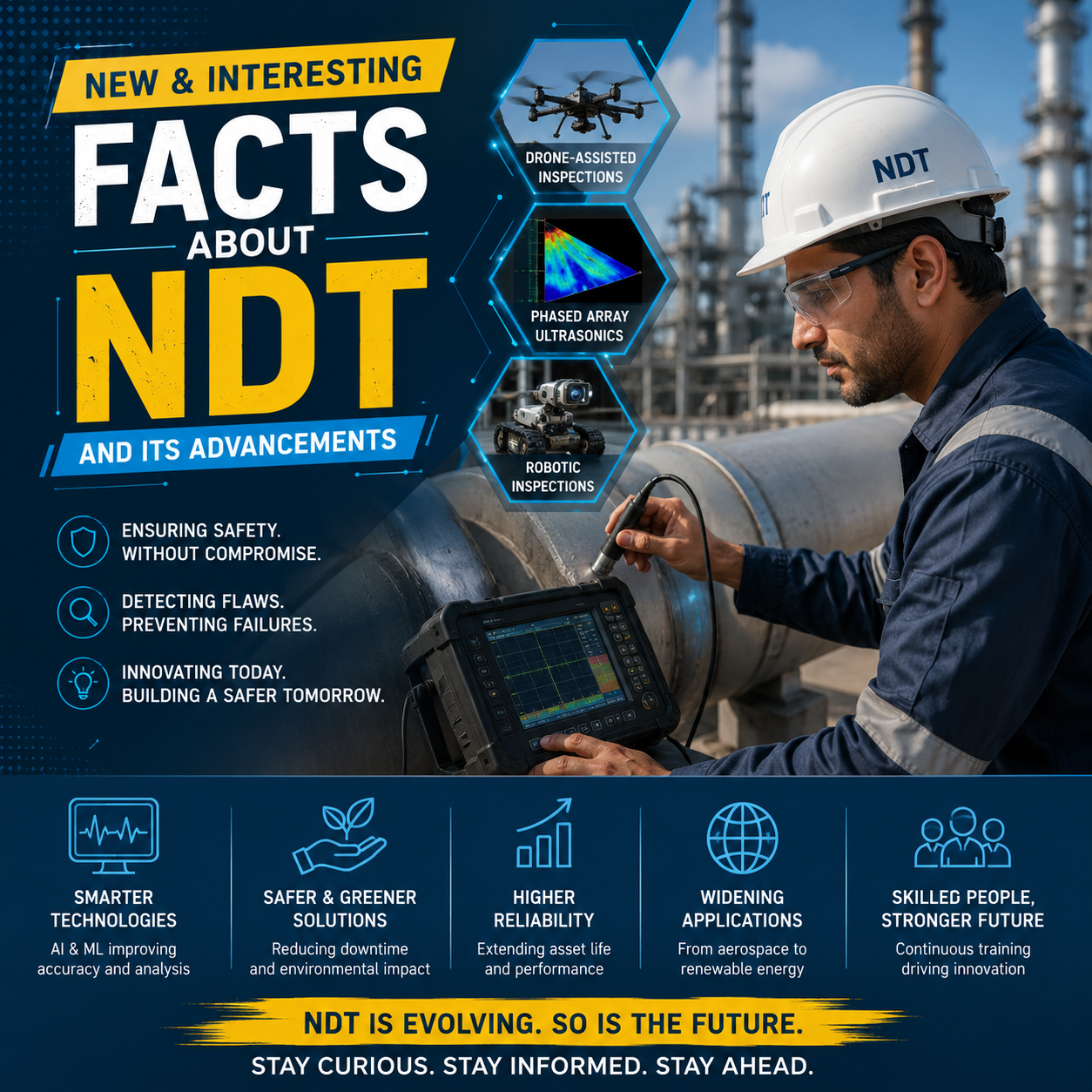
NDT 4.0 integrates advanced technologies with traditional inspection methods to create smarter, faster, and more reliable inspection systems.
Key technologies driving NDT 4.0 include:
* Artificial Intelligence (AI)
* Machine Learning
* Robotics and Automation
* Internet of Things (IoT)
* Cloud Computing
* Digital Twin Technology
* Data Analytics
* Remote Inspection Systems
* Drones and Unmanned Vehicles
* Advanced Imaging Technologies
These innovations are transforming how inspections are performed, analyzed, and documented.
Artificial Intelligence in Inspection
AI is becoming a powerful tool for assisting inspectors in detecting flaws and anomalies.
Modern systems can:
* Analyze radiographic images
* Identify potential defects
* Reduce human error
* Improve inspection consistency
* Assist in decision-making
Rather than replacing inspectors, AI enhances their capabilities by allowing them to focus on critical evaluations and engineering judgments.
The future inspector will work alongside intelligent systems, combining human expertise with advanced software tools.
Robotics and Automated Inspection
Industries are increasingly deploying robotic inspection systems in hazardous and difficult-to-access environments.
Applications include:
* Offshore Platforms
* Refineries
* Storage Tanks
* Pipelines
* Nuclear Facilities
* Aerospace Components
Robotic systems improve safety while providing highly accurate inspection data.
Quality professionals who understand automated inspection systems will have a significant advantage in future job markets.
Drones for Industrial Inspection
Drone technology is rapidly transforming inspection practices worldwide.
Drones are now used to inspect:
* Wind Turbines
* Transmission Towers
* Bridges
* Chimneys
* Storage Tanks
* Solar Farms
* Large Industrial Facilities
Drone-based inspections reduce downtime, increase safety, and improve efficiency while generating valuable digital records.
Digital Radiography and Advanced Imaging
Traditional film radiography is gradually being replaced by digital radiography systems.
Advantages include:
* Faster Results
* Higher Image Quality
* Easier Storage and Retrieval
* Improved Data Analysis
* Reduced Environmental Impact
Advanced imaging technologies are helping inspectors identify defects with greater accuracy and confidence.
Predictive Maintenance and Asset Integrity
Industries are shifting from reactive maintenance to predictive maintenance strategies.
Using data collected through inspections, companies can:
* Predict equipment failures
* Schedule maintenance efficiently
* Reduce downtime
* Improve operational reliability
* Extend asset life
NDT professionals are becoming critical contributors to asset integrity management programs across industries.
Digital Quality Management Systems
The future of QA/QC is increasingly digital.
Modern quality systems utilize:
* Cloud-Based Documentation
* Digital Inspection Reports
* Real-Time Quality Monitoring
* Electronic Quality Records
* Automated Compliance Tracking
Quality professionals who understand digital systems and data management will be highly sought after by employers.
Growing Opportunities Across Industries
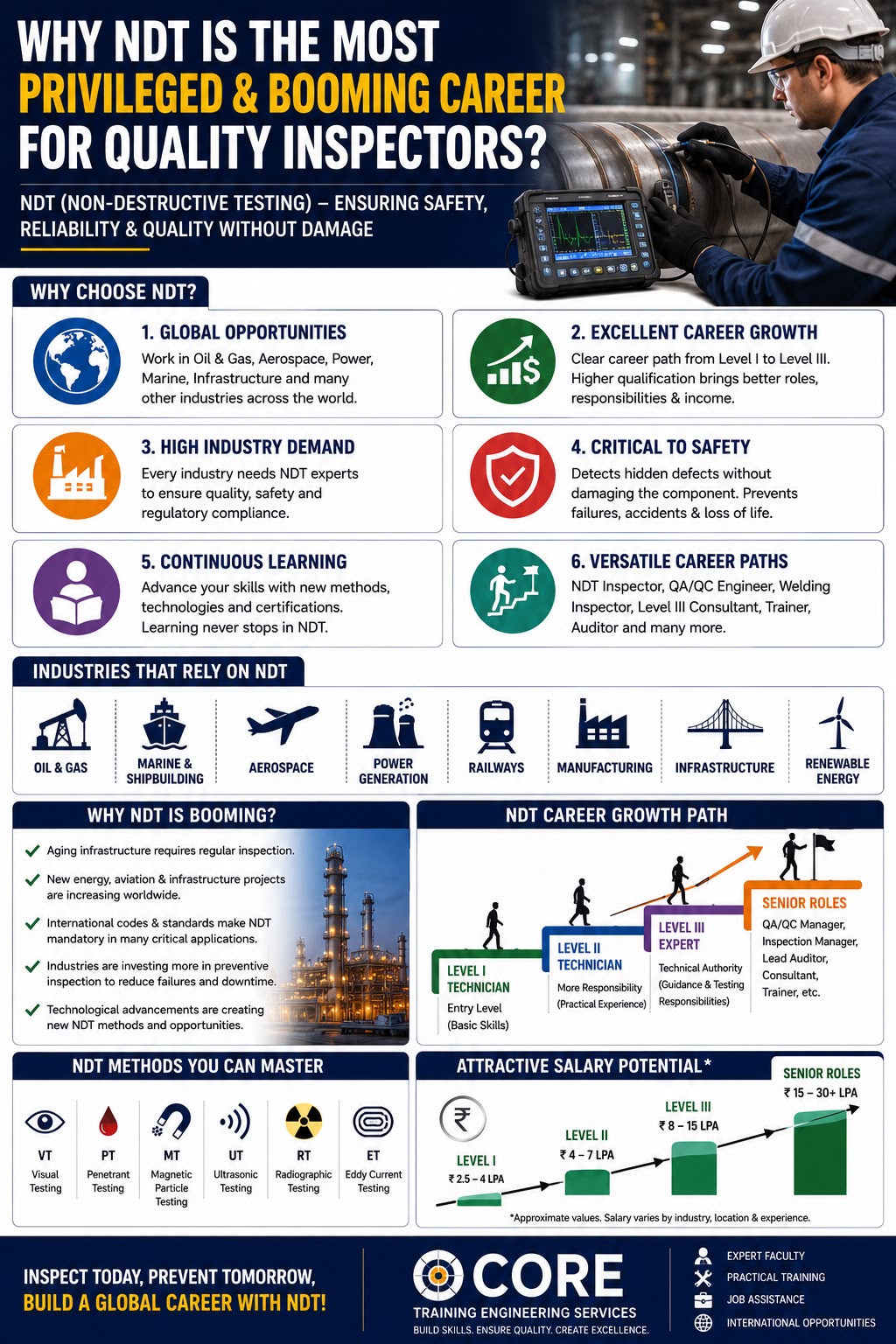
As technology advances, the demand for skilled inspection professionals continues to grow in sectors such as:
Aerospace
Aircraft manufacturing and maintenance require advanced inspection techniques to maintain safety and performance.
Oil & Gas
Pipelines, refineries, offshore platforms, and petrochemical facilities rely heavily on NDT and quality assurance programs.
Railways and Transportation
High-speed rail projects, metro systems, and transportation infrastructure require continuous inspection and monitoring.
Renewable Energy
Wind turbines, solar power plants, hydrogen facilities, and energy storage systems create new opportunities for inspection professionals.
Construction and Infrastructure
Large infrastructure projects demand rigorous quality control and compliance with international standards.
Manufacturing and Automation
Advanced manufacturing environments depend on inspection systems that support quality and productivity goals.
Skills Future Inspectors Need
To remain competitive, future NDT and QA/QC professionals should focus on developing:
* Strong Technical Knowledge
* Digital Literacy
* Data Interpretation Skills
* Understanding of AI-Assisted Inspection
* Familiarity with International Codes and Standards
* Communication and Reporting Skills
* Problem-Solving Capabilities
* Adaptability to Emerging Technologies
Continuous learning will become one of the most important factors for long-term career success.
Will Technology Replace Inspectors?
This is one of the most common questions asked by students and professionals.
The answer is simple: technology will assist inspectors, not replace them.
Machines can collect data, identify patterns, and automate repetitive tasks. However, engineering judgment, decision-making, code interpretation, risk assessment, and professional responsibility still require trained and competent inspectors.
As technology evolves, the role of inspectors becomes more valuable, not less.
Future professionals will be expected to manage advanced systems, interpret complex data, and make critical quality decisions.
The Future Looks Bright
The future of NDT and Quality Inspection is filled with opportunity.
As industries invest in smarter technologies, safer operations, and sustainable infrastructure, the need for highly skilled inspection professionals will continue to rise.
Professionals who embrace innovation, continuously upgrade their skills, and adapt to emerging technologies will find rewarding careers across India and around the world.
Preparing for the Future with CORE
At CORE Training & Engineering Services, we understand that the future belongs to professionals who combine practical skills with technological knowledge.
For over 15 years, CORE has been preparing students and industry professionals through practical training, industry exposure, and career-focused learning programs.
Our mission is to develop inspection and quality professionals who are ready not only for today’s industry but also for the technologies and challenges of tomorrow.
Learn Today. Lead Tomorrow.
The future of NDT and Quality Inspection is not just about finding a job—it’s about becoming part of an industry that protects lives, ensures quality, drives innovation, and supports global progress.
Build your expertise. Embrace technology. Shape the future with CORE Training Engineering Services.


Leave a Reply