
🔍 What is Non-Destructive Testing (NDT) and Why is it Important in Modern Industries?
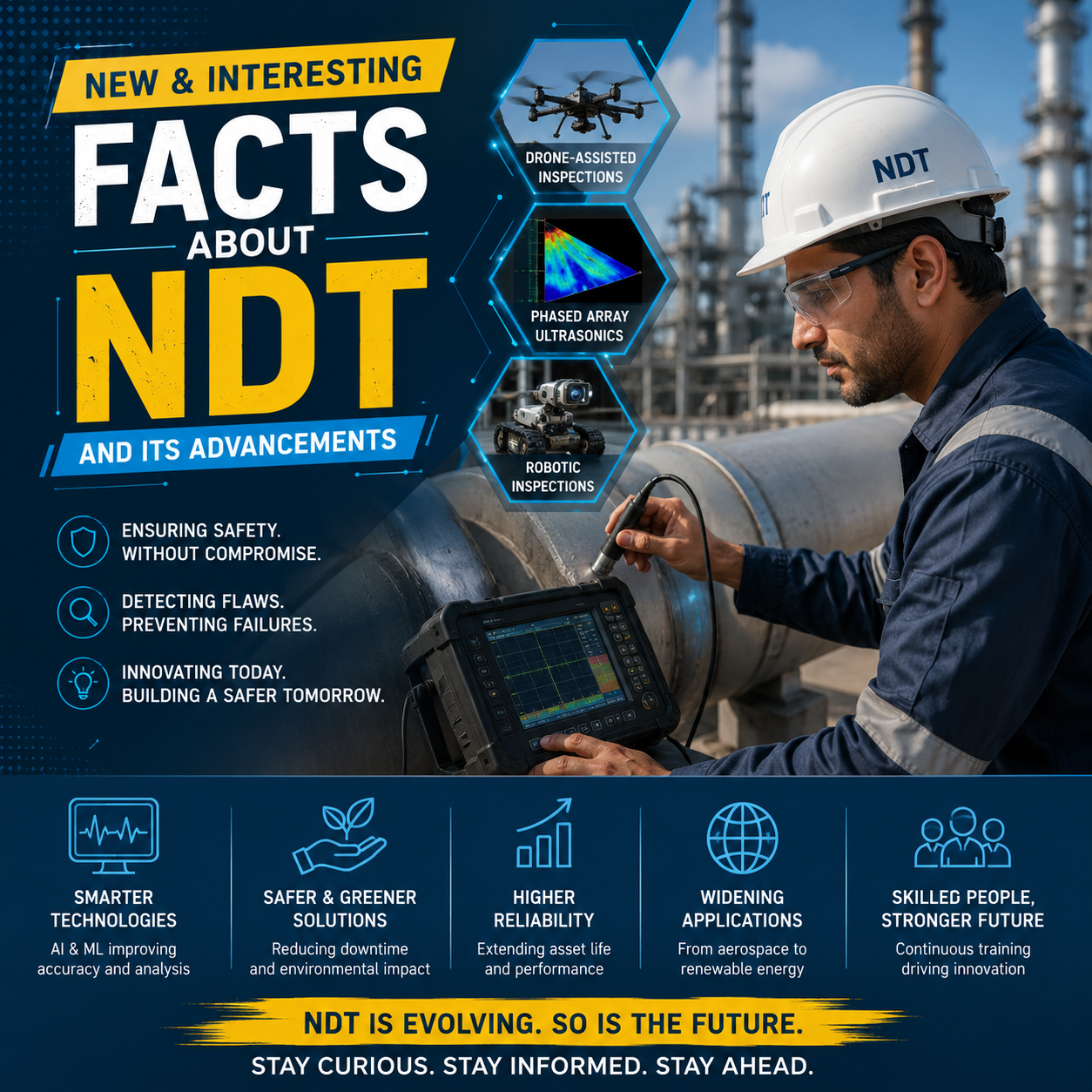
1. AI is Now Detecting Weld Defects
Modern NDT systems are now using Artificial Intelligence (AI) and Machine Learning to automatically identify defects in radiography films and ultrasonic scans.
AI can:
* Detect cracks faster
* Reduce human error
* Improve inspection accuracy
* Generate automated reports
Industries are now moving toward “Smart Inspection Systems” where software assists Level II and Level III inspectors.
2. Drone-Based NDT is Growing Rapidly
Drones equipped with thermal cameras, UT scanners, and visual inspection systems are now inspecting:
* Chimneys
* Wind turbines
* Storage tanks
* Pipelines
* Offshore structures
This reduces:
* Human risk
* Shutdown time
* Inspection cost
Drone NDT is becoming a major future technology in oil & gas and power industries.
3. Phased Array Ultrasonic Testing (PAUT) is Replacing Conventional UT
Traditional Ultrasonic Testing uses a single probe angle, but PAUT uses multiple angles simultaneously to create highly detailed images of welds and defects.
Benefits:
* Faster scanning
* Better defect sizing
* Permanent digital records
* Higher probability of detection
PAUT is now widely used in:
* Refineries
* Nuclear plants
* Aerospace
* Critical piping systems
4. Digital Radiography (DR) is Replacing Film Radiography
Conventional RT films are gradually being replaced by Digital Radiography.
Advantages:
* Instant image results
* No chemical processing
* Better image enhancement
* Easier storage & sharing
* Environment friendly
Digital RT saves huge inspection time during shutdown projects and fabrication work.
5. Robotics + NDT is the Future of Inspection
Robotic crawlers are now performing inspections inside:
* Pipelines
* Boilers
* Pressure vessels
* Nuclear reactors
These robots can carry:
* UT probes
* Cameras
* Eddy current sensors
* Laser scanners
This allows inspection in hazardous areas where human access is dangerous or impossible.
Bonus Insight
The global NDT industry is shifting from “finding defects” to “predicting failures” using:
* AI
* Data analytics
* Predictive maintenance
* Digital twins
* Automated inspection systems
This means future NDT professionals will need:
* Technical inspection knowledge
* Software understanding
* Digital reporting skills
* Advanced equipment handling expertise
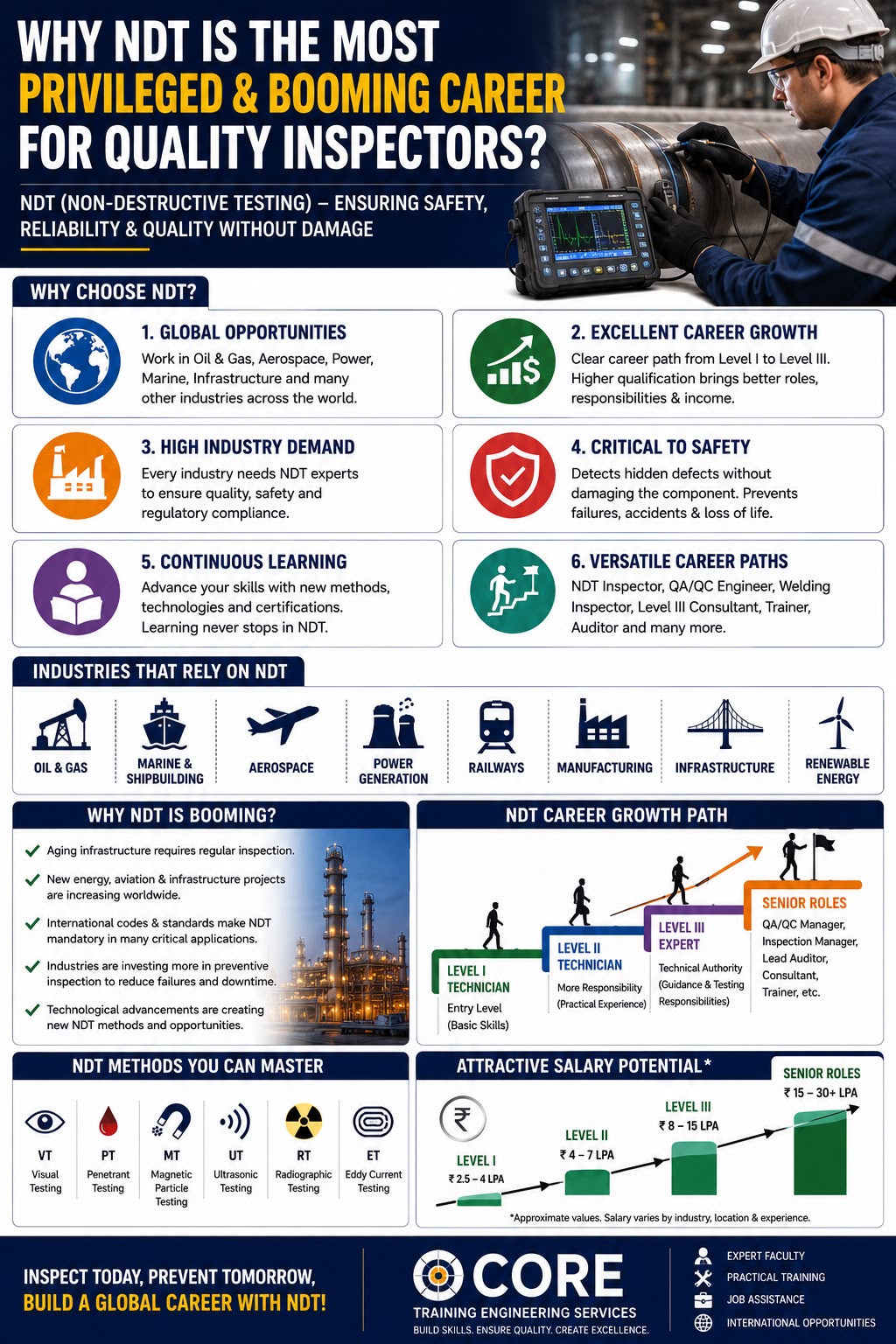
CORE Training Engineering Services can position itself strongly by training students not only in conventional NDT but also in advanced technologies like:
* PAUT
* TOFD
* Digital RT
* Drone Inspection
* AI-assisted inspection systems




Leave a Reply